
The Wind Beneath My Wings

Our final day in Shyogwe started with a visit to Gikomero Clinic, a church run health facility which has been supported by CHI for many years, in addition to equipment the salary of three nurses are supported.
A tour of the clinic revealed a number of areas of need, not least a laboratory without running water or a fridge. There is a great need for additional water tanks as already, just 6 weeks into the dry season, only one of the three tanks has water remaining.

The baby incubator stood in pride of place in the delivery room next to the birthing bed both provided after our last visit, we heard how fewer babies are now referred to the hospital as they can be safely cared for at the clinic.
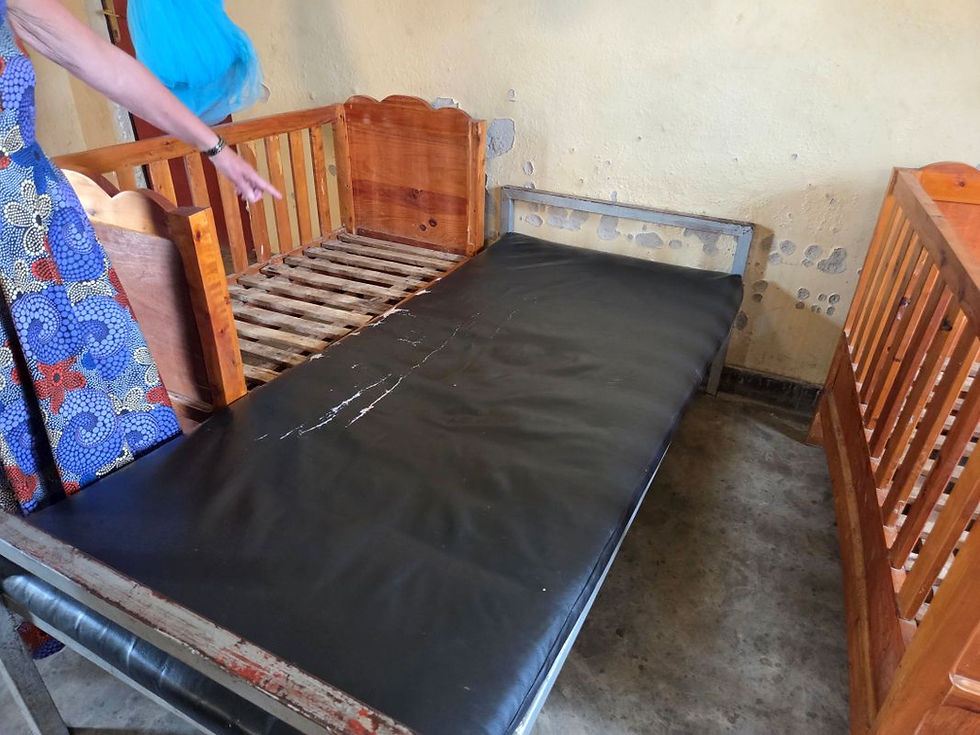
We also saw the mattresses provided after our last visit, still in good condition and serving well. Unfortunately, only the adult beds have mattresses, the baby’s cots are just wooden slats.
Nurse Sophie, one of our supported nurses was busy in the treatment room but was happy to pause her work to tell us how much the support was appreciated. We apologised to her patient and left her in peace.

Tour over we met with nurse Bridgitte, our original supported nurse, who has worked with Gikomero Clinic for around 10 years. She is now deputy manager and very happy with her role. She also works in the community supporting sex workers, single mums and those with mental health issues.

She had previously told us how she was supporting a group of single mums and we had provided sewing machines and material to enable them to learn a skill. The first group are now competent and have begun to earn a small income from the garments they make. Today we met her new group of ladies who come together to pray, and are obviously delighted to also have the opportunity to learn a skill. They have a savings group and contribute 200rwf (about 10p) a week. This also helps provide the materials required. They were happy to welcome us and entertained with song and dance.
The small room they use, which has been loaned by the church, is adjacent to the school playground, and we just happened to be leaving as they came out for their break. As you can imagine, a certain amount of CHI ensued as we were surrounded by children all wanting to touch and speak to us.
Leonard had been mentioning a drone centre he wanted to take us to, we were not at all sure it would be of interest but he was very keen, so next stop was to a facility named Zipline, Pauline was hopeful of an adventure but that thought was soon dispelled.

Zipline are the company that deliver medical supplies by drone to the hospitals, health centres and clinics in Rwanda. We were taken on a tour of this amazing facility, we saw the control centre where every drone is tracked, the airports have the same interface so they too can see the path of every drone in use.
We visited the warehouse, compact but well stocked with blood products, vaccines, drugs and other medical supplies. The system is fully computerised, and we learnt how an emergency request for bloods or other items automatically jumps to the top of the list and the items are despatched within 5 minutes of the call being received. Deliveries to the most distant centres take no more than 50 minutes, a journey of around 6 hours by road.
Original trials of blood deliveries saw such a dramatic drop in mortality rates that the service was expanded to deliver a wider variety of medicines and equipment. Items are packed in boxes with small parachutes with a weight limit of 3.3kg on any one drone.
Then we were taken to the launch site and watched in fascination as polystyrene drones were packed, assembled on the launch pad, and sent on their way at the push of a button. We could have watched all day, it was absolutely awesome.
Just as we were preparing to leave Prosper, our very knowledgeable and enthusiastic guide, told us a drone was due back in, this we had to see. Based on the same principal as a fighter plane landing on the deck of a ship, the drone flies into a catch wire suspended between to supports and is gently lowered to the ground, the precision is breath taking. We just had to stay a little longer to watch it all again.
The benefits of this system are immeasurable, the speed and efficiency of deliveries to remote and difficult to reach locations, reducing congestion on the roads, pollution and fuel costs are the obvious ones, but the benefits of having all medical supplies in one location means less wastage of products with limited life and less overstocking or shortages, as everything is distributed as required. We could enthuse for hours about this facility it was just so simple, efficient and impressive.
A quick stop back at the office for lunch beautiful gifts from the diocese before returning to Kigali, our last destination before returning home next week.

It is good to know we do not have to move on again although the discovery that we have no water tonight, and no idea when it will be back on, does not fill us with glee.
Rwanda now seems to be a country of extremes, the abject poverty of the rural villages without schools, water or electricity against the amazing technology of facilities like Zipline. Undoubtedly, a country developing fast, we pray not too many get left behind in the rush.


Comments